
Sixfab AI HAT Plus 11
Sixfab AI HAT Plus 5
Sixfab AI HAT Plus 2
Sixfab AI HAT Plus 10
Sixfab AI HAT Plus 3
Sixfab AI HAT Plus 4
Sixfab AI HAT Plus 7
Sixfab AI HAT Plus 9
Sixfab AI HAT Plus 19
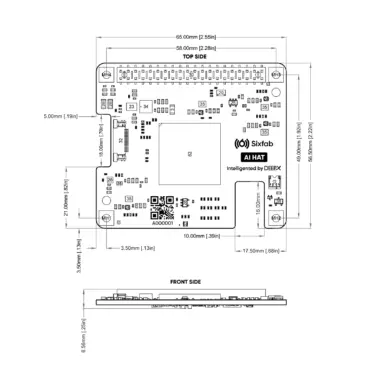
AI HAT Plus Dimension 1
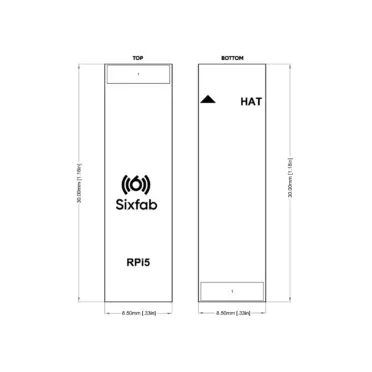
AI HAT Plus Dimension 2
SKU: - Category:

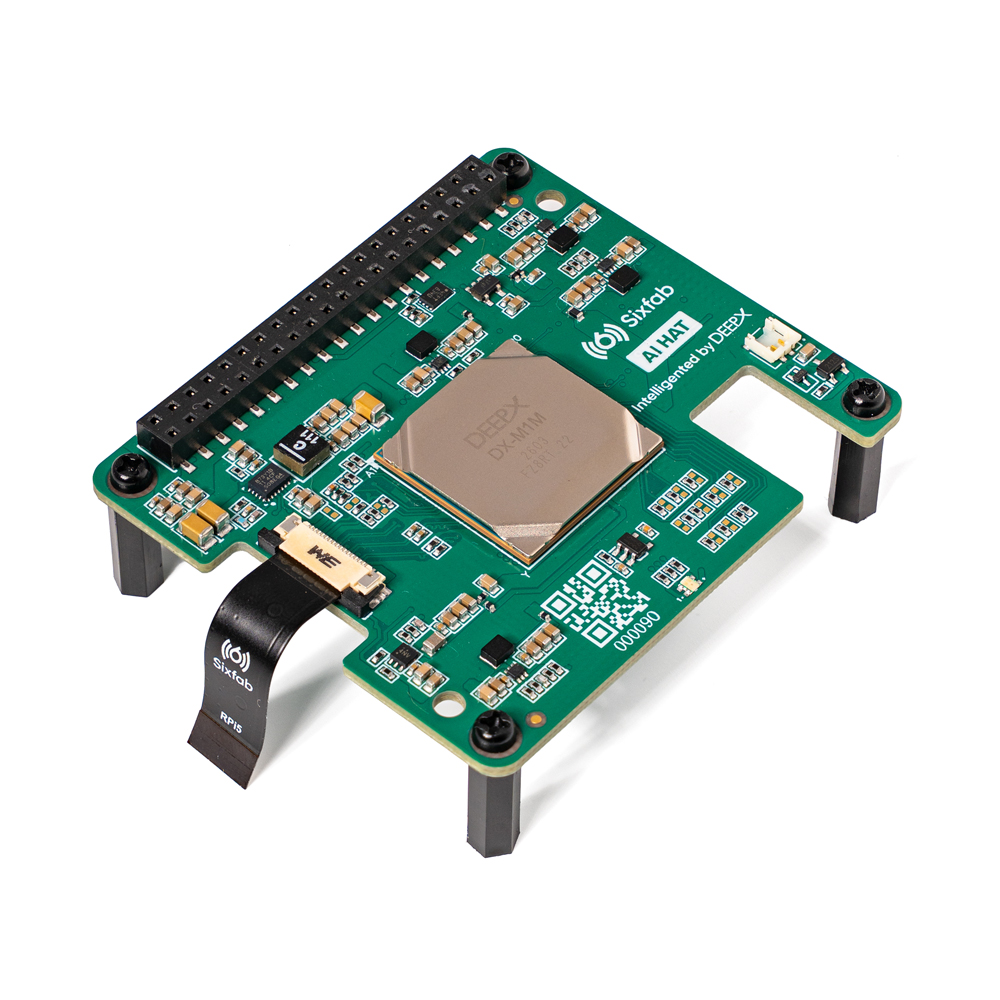
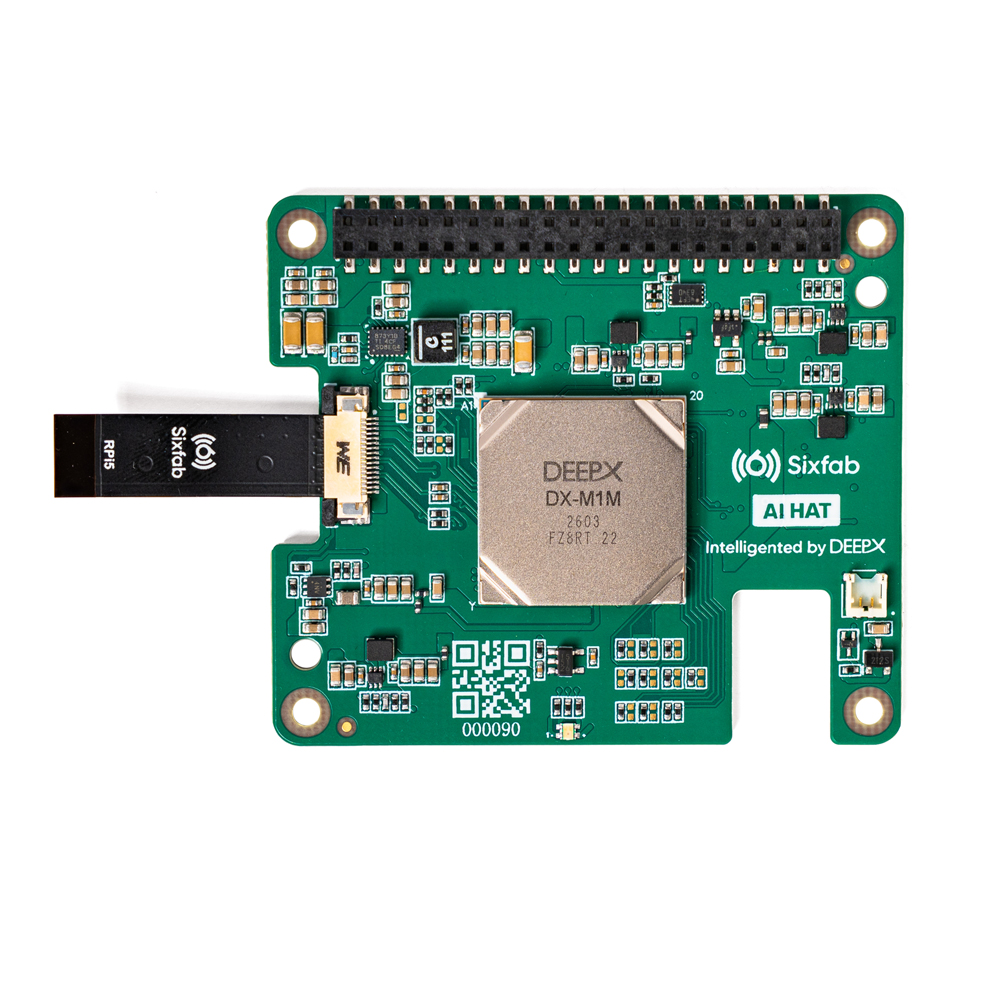
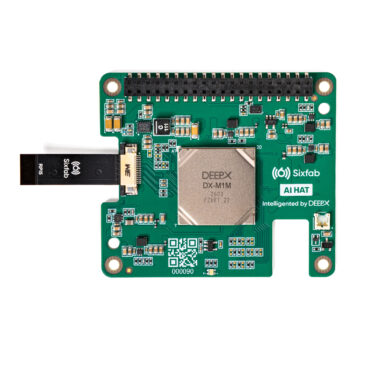
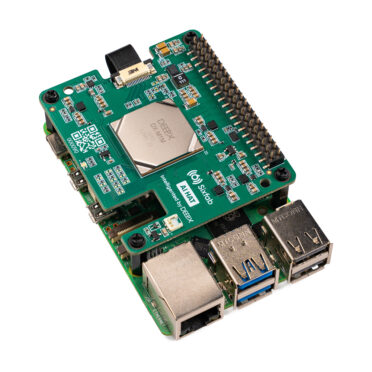
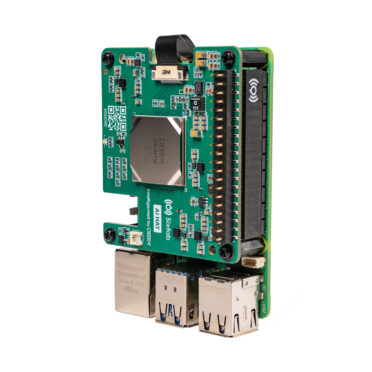
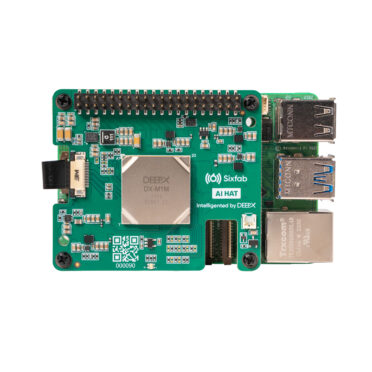
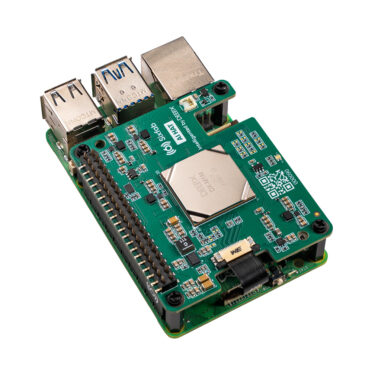
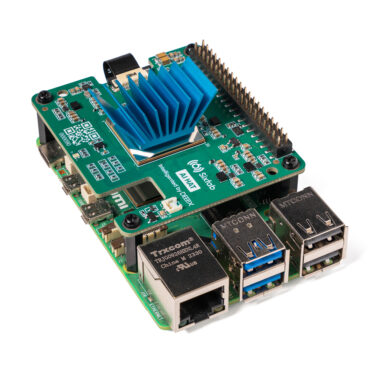
Sixfab AI HAT+ for Raspberry Pi 5 

Build and test vision AI models directly on Raspberry Pi 5.

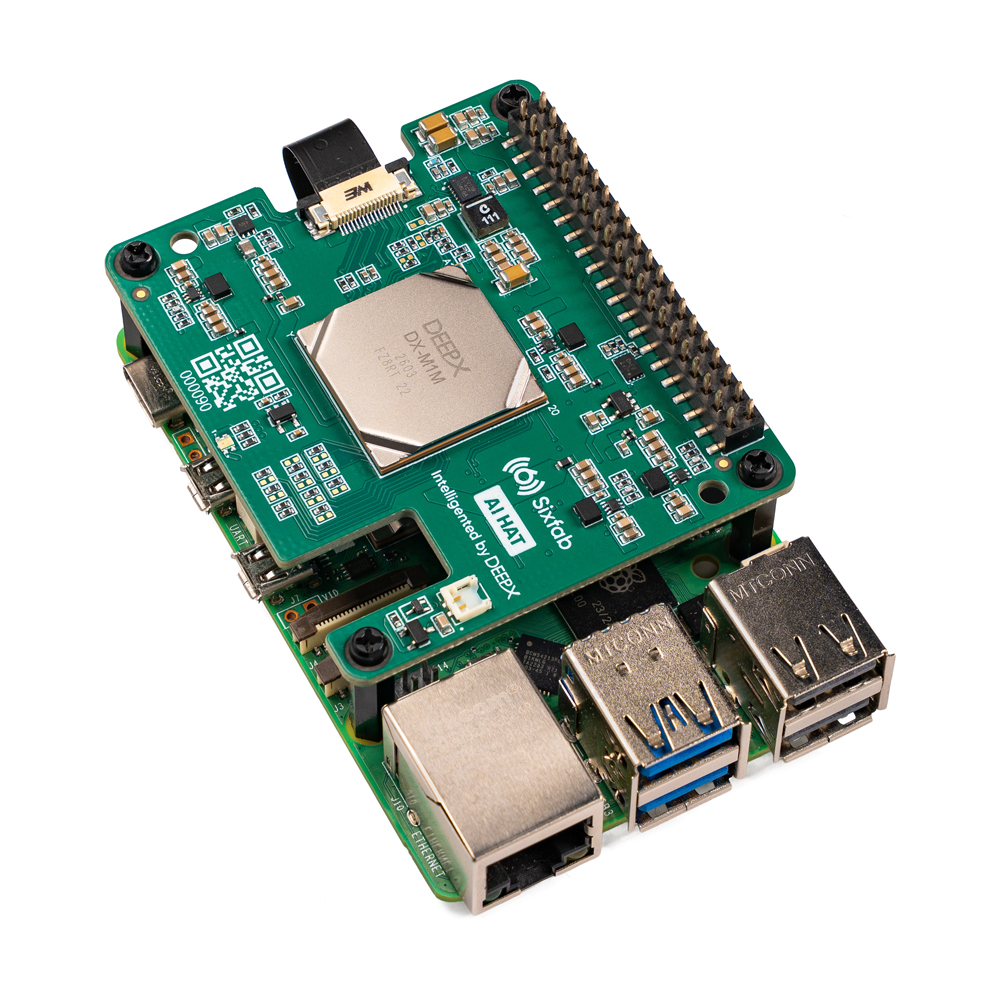
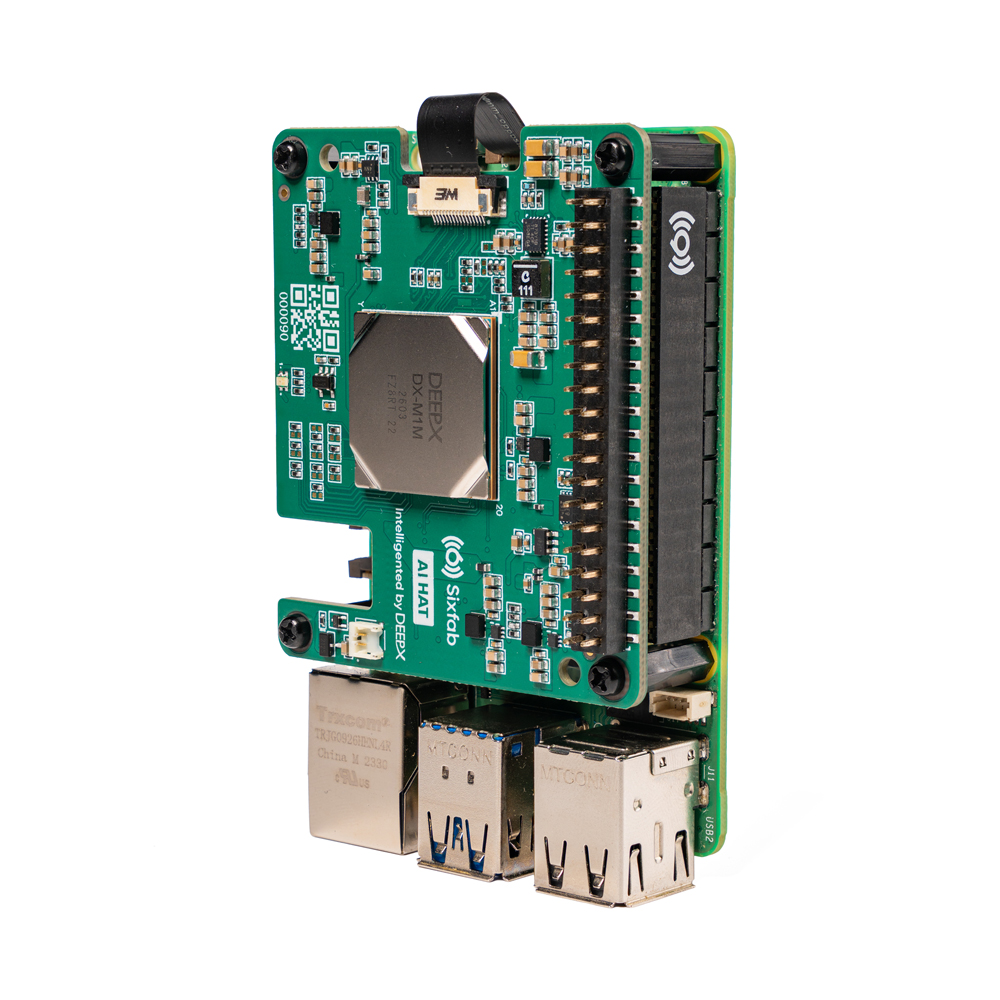
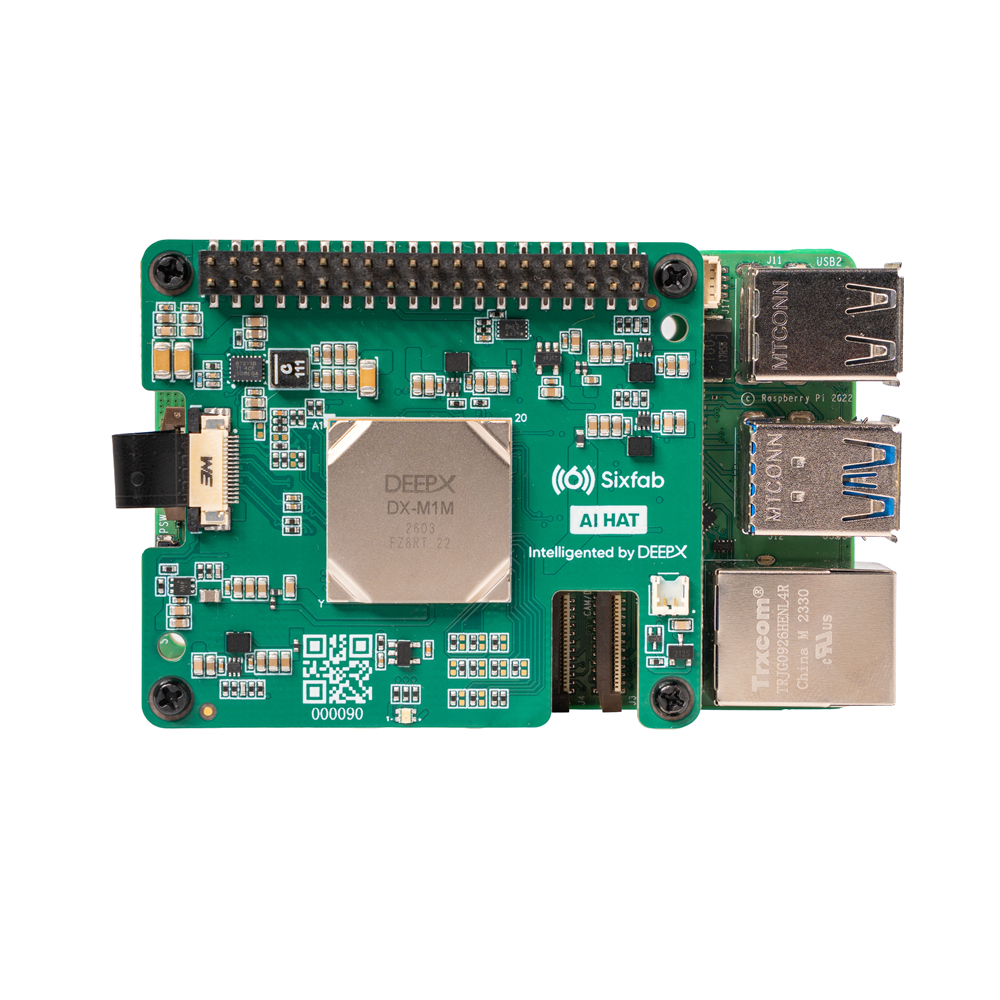
Sixfab AI HAT+ delivers compact DEEPX AI acceleration for rapid prototyping and local inference. No cloud dependency, no external GPU, no complex setup. Plug in the HAT+, install a single APT package, and deploy AI inference on your hardware in minutes.

Price range: $63.00 through $90.00

Description

Intelligented by DEEPX

Sixfab AI HAT+ for Raspberry Pi 5: Edge AI Acceleration with the DEEPX NPU

Run vision AI workloads on Raspberry Pi 5 in real time. Locally, no cloud, no GPU. Plug in the HAT+, install one APT package, and ship inference on your own hardware.

Up to 25 TOPS at INT8 PCIe Gen 3 ×1 HAT+ compliant
Built on Raspberry Pi No cloud required
Two SKUs · one board

Choose your TOPS

Same PCB, same HAT+ form factor, same software stack. The NPU module is the only difference. Pick the variant that fits your workload and budget.

Available by Q4, 2026

AI HAT+ 13 TOPS

$63
DEEPX DX-M1ML · INT8
NPU memory 1 GB LPDDR4X
Best for Single-camera, single-model
Typical scenario Low-power projects, cost-sensitive builds

Raspberry Pi 5 native. DEEPX-class inference.

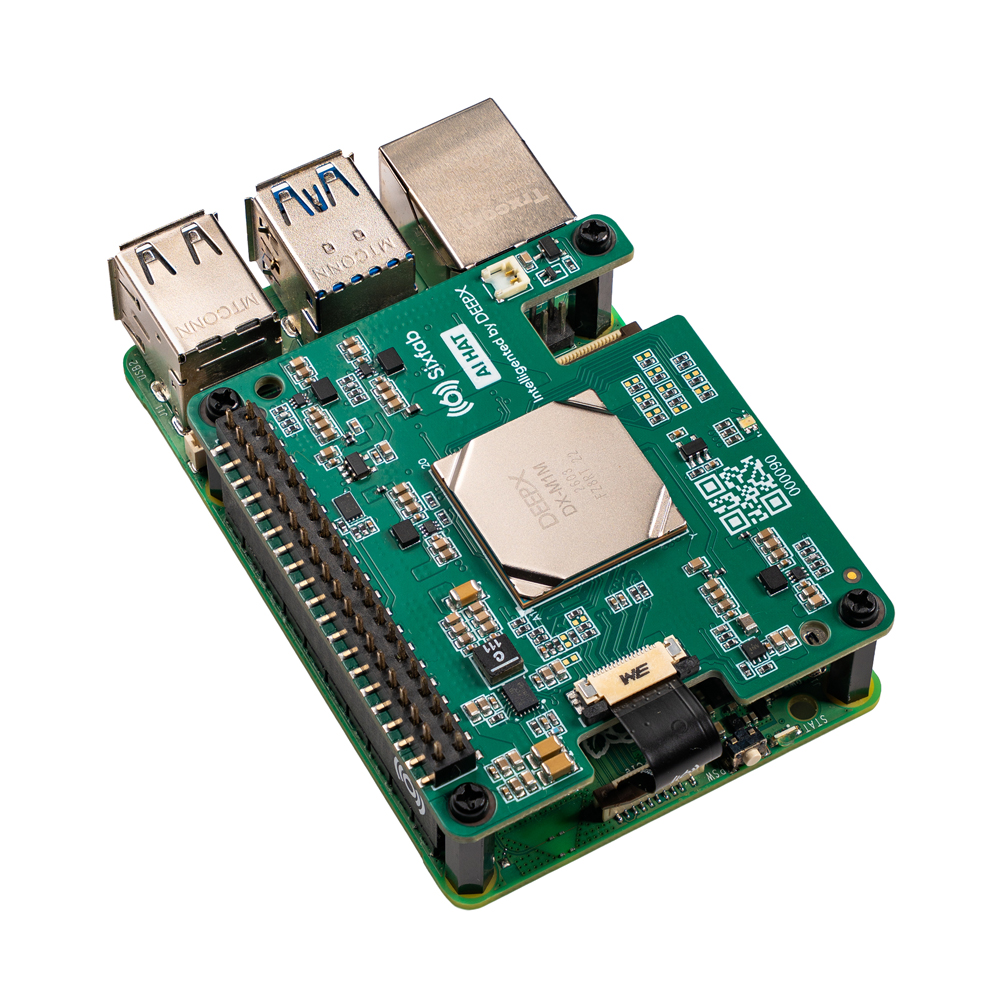
As an Official Raspberry Pi Design Partner, Sixfab integrates the DEEPX DX-M1M family directly onto a HAT+ compliant board, giving Pi 5 developers production-grade NPU acceleration over native PCIe without leaving the Raspberry Pi ecosystem.

25 TOPS at INT8

DEEPX DX-M1M, 2 GB LPDDR4X · 13 TOPS variant with DX-M1ML

PCIe Gen 3 ×1

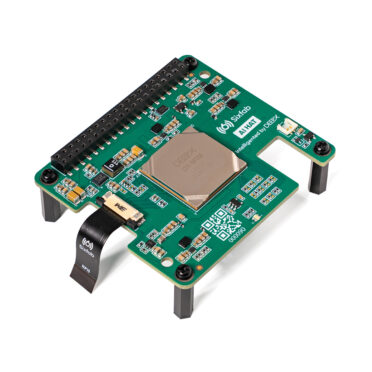
Native Pi 5 PCIe via 16-pin FFC cable. No USB hops, no bandwidth bottleneck

~3 W Typical NPU

3 W typical NPU draw · ~13–15 W combined Pi 5 + HAT+ under load

HAT+ Spec compliant

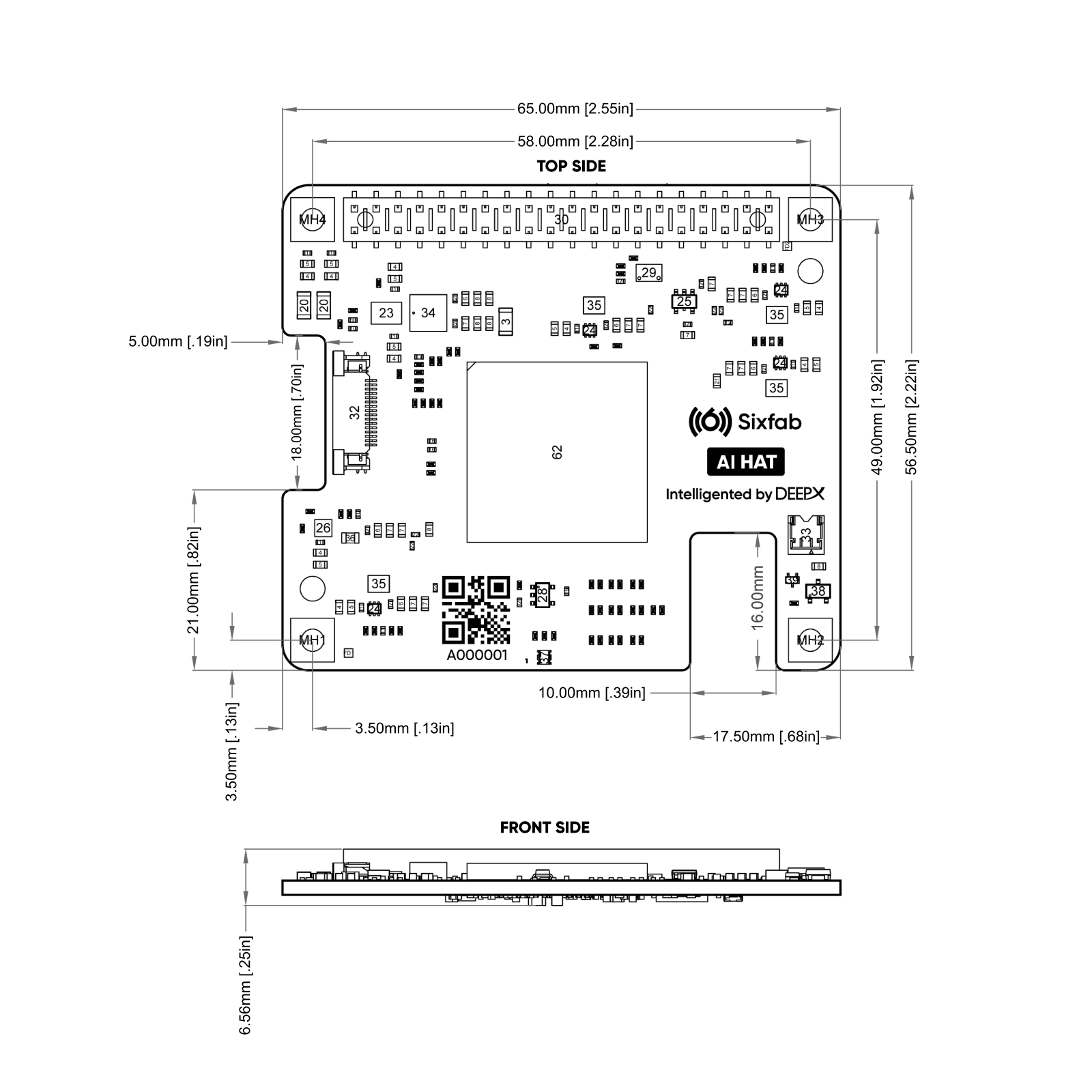
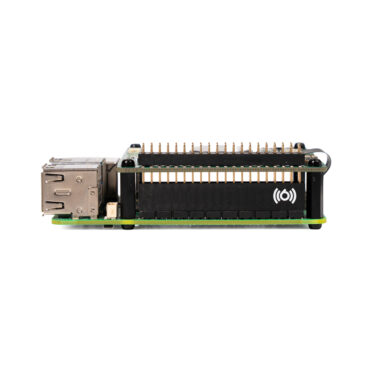
Raspberry Pi HAT+ EEPROM auto-config · 56.5 × 65 mm · stacking-friendly

One DEEPX NPU · Three edge AI form factors

Bring AI to the edge

The edge AI ecosystem for Raspberry Pi 5. One NPU, one SDK, three form factors for real-world deployment. Never rebuild your stack.
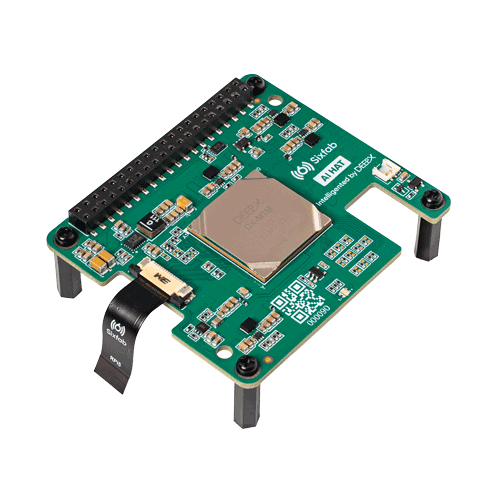
Sixfab AI HAT+ for Raspberry Pi 5 This Product

On-device AI

13 / 25 TOPS

AI acceleration for Raspberry Pi 5. Up to 25 TOPS of local AI performance. Plug in, install via APT, and start inferencing in minutes.
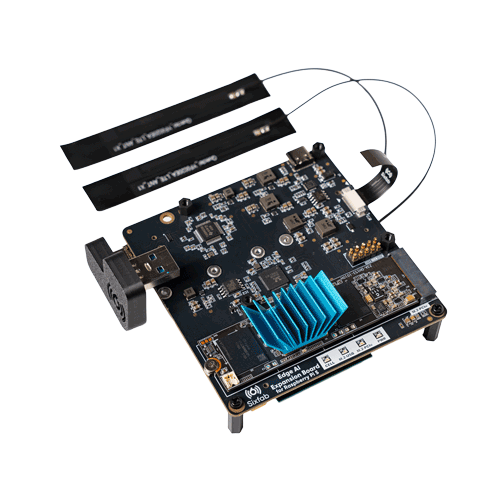
Sixfab AI HAT+ for Raspberry Pi 5 You Are Here
Sixfab Edge AI Expansion Board

Connected edge systems

25 TOPS · LTE/5G

Add LTE/5G connectivity, NVMe local storage, and multi-camera support for real field deployments in a single under-board stack.
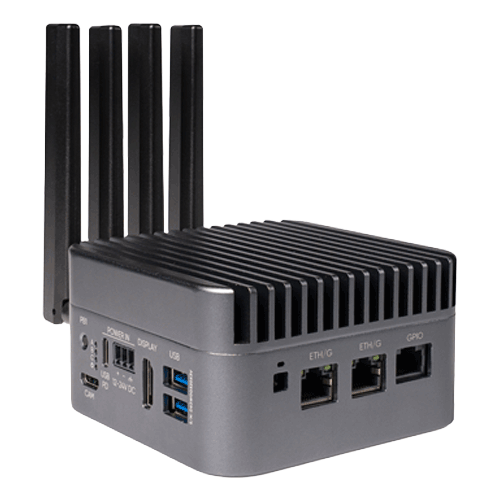
Sixfab Edge AI Expansion Board Learn More
ALPON X5 AI industrial edge AI computer

Industrial edge AI deployment

25 TOPS · −20 to +60 °C

Fanless, rugged, always-online edge AI computer for fleets and distributed industrial sites. Secure by design, IP40-rated, ALPON™ CLOUD-managed.

ALPON X5 AI Learn More
How it works

A live pipeline, one board, on-device AI

Frames flow in. The Pi 5 hosts your app. The DEEPX NPU does the neural math. Results come back. Watch the data move.

Why teams pick AI HAT+

Production-grade NPU. Raspberry Pi simplicity.

A HAT+ specification compliant accelerator that drops onto the Pi 5 you already know, with no third-party SDKs, no driver hacks, and no architectural commitments you can’t undo later.

Soldered NPU

Soldered DEEPX silicon transfers heat into the PCB far more efficiently than a socketed M.2 card. No socket to fail, no module slop, no third-party variability.

~3 W typical

NPU draws 2.5–3 W typically. Combined Pi 5 + HAT+ runs at 13–15 W on the official 27 W PSU.

APT install

Signed Sixfab repository ships dxrt-runtime, kernel driver, and tools. Update with apt update.

DXNN SDK

Bring ONNX models from PyTorch, TensorFlow, or Keras. Compile with DX-COM. Deploy with the C++ or Python runtime.

Official Raspberry Pi Design Partner Intelligented by DEEPX
Confirmed specifications

Sixfab AI HAT+: at a glance

The essentials. Every value here is sourced from R&D. For the full electrical, mechanical, and software reference, see the Hardware Reference docs.

Key specifications
AI acceleratorDEEPX DX-M1M (25 TOPS) or DX-M1ML (13 TOPS) at INT8
NPU memory2 GB LPDDR4X (DX-M1M) · 1 GB LPDDR4X (DX-M1ML)
Host interfacePCIe Gen 3 ×1 over 16-pin FFC cable
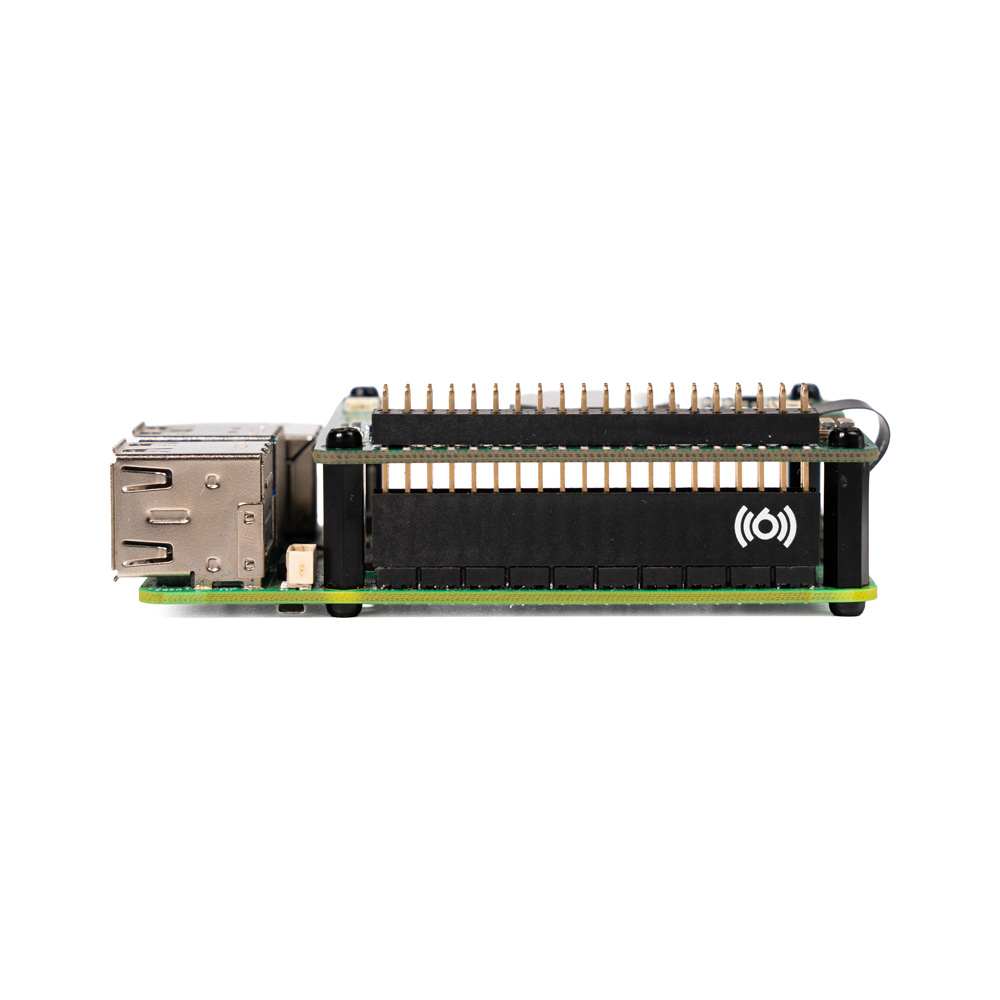
Form factorRaspberry Pi HAT+ · 56.5 × 65 mm · 6.56 mm tall
Power input5 V via the Pi 5 2×20-pin header and PCIe connector
NPU power draw3 W (typical)
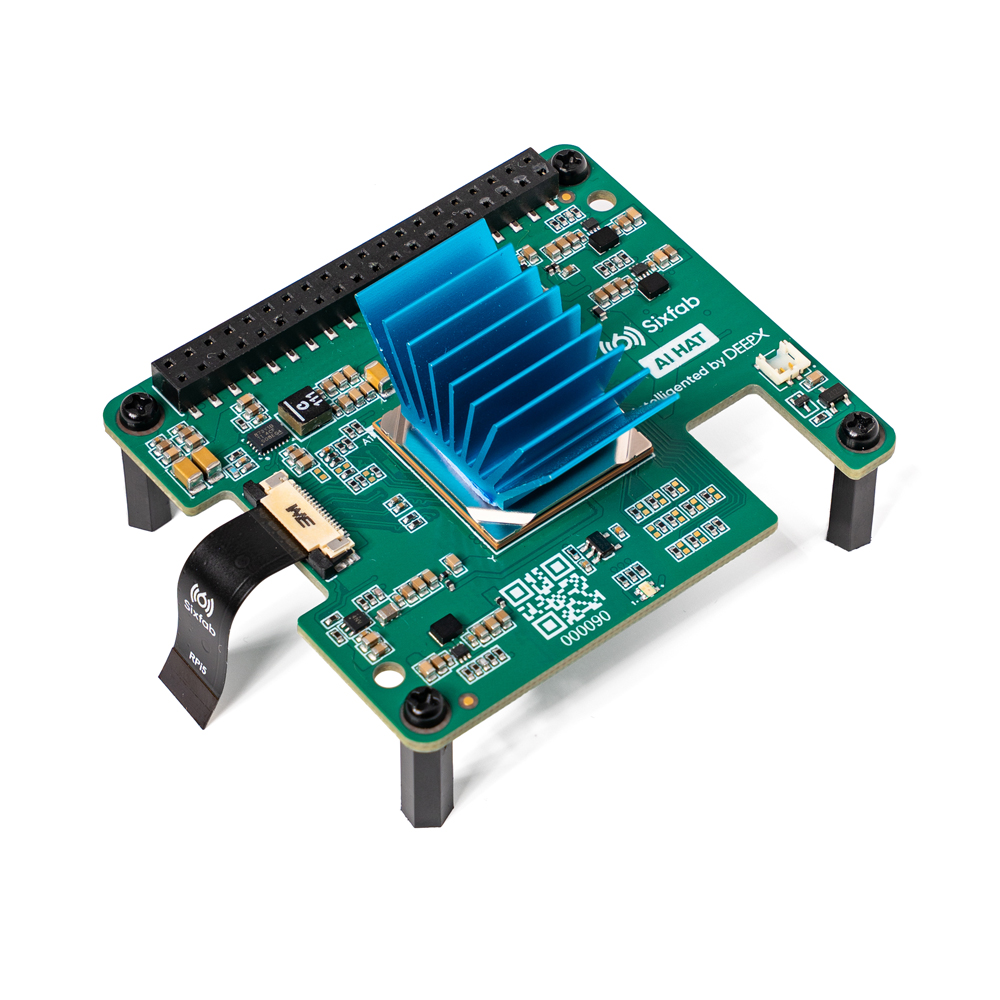
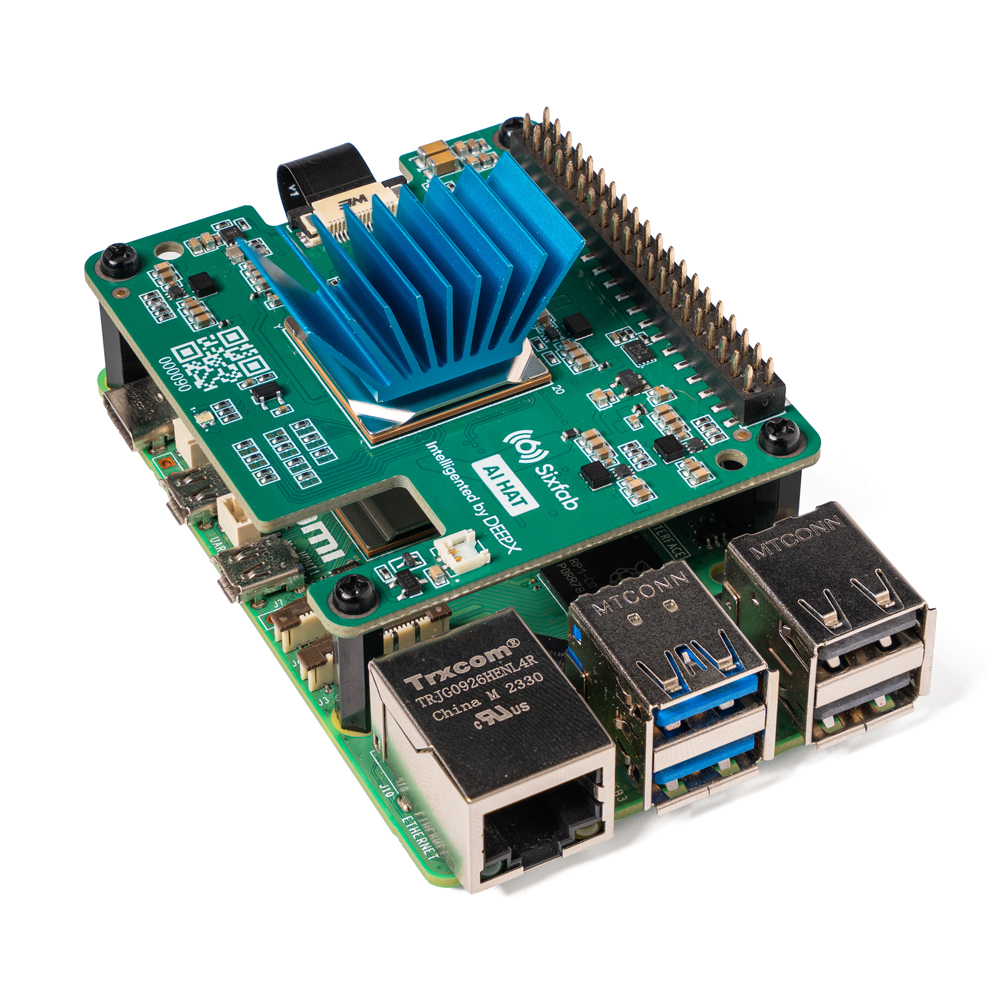
CoolingPassive
Operating temperature0–70 °C commercial
Supported hostRaspberry Pi 5
Host OSRaspberry Pi OS (Trixie)
Runtimedxrt-runtime · APT install · Python & C++ APIs
Model pipelineONNX → DXNN via DX-COM compiler
Hot-plugNot supported. Power off Pi 5 before mounting
Two paths to deployment

Run a pre-built model, or bring your own

Sixfab gives you two complementary ways to get vision AI running on Raspberry Pi 5. Pick the path that matches your time-to-demo goal.

Option 1 · Fastest demo

Sixfab Model Zoo

Pre-compiled DXNN models · ready to run · no training required.

A curated set of pre-optimized models for common vision tasks: YOLOv8n, MobileNet, ResNet, and more, already compiled for the DEEPX NPU. Download, deploy, run. Use it for evaluation, classroom demos, or as a starting point for your own pipeline.

Browse the Sixfab Model Zoo
Option 2 · Custom models

DEEPX DXNN SDK

Full custom model deployment · ONNX in, DXNN out · Python & C++ APIs.

Take a model you’ve trained yourself in PyTorch, TensorFlow, or Keras. Export to ONNX, compile to DXNN with DX-COM, and run it on the NPU through the Python or C++ runtime. INT8 quantization is automatic, with ~2 % accuracy delta vs the FP32 source.

Open the DXNN SDK guide
What you can build

Real-world use cases

AI HAT+ runs vision AI workloads locally on a Raspberry Pi 5, which makes it a fit anywhere “no cloud” or “low latency” is the requirement and a discrete GPU is overkill.

Video analytics cameras

On-device object detection, counting, intrusion analytics, and retail insights on a single Pi 5 unit. Process frames locally, transmit only events upstream.

Robotics & autonomous systems

Real-time perception, object tracking, and navigation assistance on AMRs, robot arms, and visual-inspection rigs. Zero cloud-round-trip latency.

Smart city & infrastructure

Traffic monitoring, facility management, and safety systems on roadside Pi 5 units. Aggregate metadata over LTE, keep raw video on-device.

Industrial automation

Defect detection, quality inspection, and process monitoring on the production floor. Run offline. Survive network outages without losing inference.

Drones & autonomous systems

On-board perception with low weight and ~3 W typical NPU draw. Full inference capability during flight without a discrete GPU power budget.

Edge servers & AIoT

Compact inference nodes for multi-camera deployments. Distributed edge intelligence with the Raspberry Pi 5 ecosystem behind the SoC.

Tested & certified

Compliance & certifications

Certification in progress
CE FCC UKCA RoHS REACH

Start running edge AI today, from $63

Sixfab AI HAT+ brings DEEPX-class NPU inference to Raspberry Pi 5. Open documentation. Open benchmarks. One APT install away.

FAQ

AI HAT+ · Frequently asked questions

Frequently asked questions

Short answers to the most common questions about the Sixfab AI HAT+ for Raspberry Pi 5, the DEEPX DX-M1M / DX-M1ML NPU variants, and how it compares to other Raspberry Pi 5 edge AI setups.

Q What’s the difference between 13 TOPS and 25 TOPS?

13 TOPS (DEEPX DX-M1ML): Single-model, single-camera deployments. Low power.

25 TOPS (DEEPX DX-M1M): Multi-model pipelines, multi-camera, high-resolution. Recommended for most projects.

Both share the same PCB, HAT+ form factor, software stack, and DXNN SDK. Only the soldered NPU module differs.

Q How do I decide whether 13 or 25 TOPS is right for my project?

Size it from three things: how many camera streams and models you run at once, your target input resolution, and whether you want headroom for future models.

Pick 13 TOPS (DX-M1ML) for single-camera, single-model pipelines, prototypes, and budget-sensitive builds at common resolutions. Pick 25 TOPS (DX-M1M) for multi-stream 1080p, higher-resolution single-stream, multi-model pipelines, or larger compiled models, and it is the safe default when you want room to grow.

To estimate before you buy, check the per-model FPS figures in the Sixfab Model Zoo against your target frame rate and stream count. Both variants share the same PCB and software, so you can also prototype the pipeline and watch NPU utilization in System Monitoring. If the 13 TOPS part is saturated, step up to 25 TOPS.

Q How does it compare to the Raspberry Pi AI HAT+ and AI HAT+ 2?

All three are HAT+ form-factor accelerators that mount on a Raspberry Pi 5 and run inference on a soldered NPU over PCIe. The difference is the silicon. Sixfab AI HAT+ uses DEEPX (DX-M1ML at 13 TOPS or DX-M1M at 25 TOPS, INT8); the Raspberry Pi boards use Hailo.

vs Raspberry Pi AI HAT+: The Raspberry Pi AI HAT+ ships as Hailo-8L (13 TOPS) or Hailo-8 (26 TOPS). For vision, Sixfab’s 25 TOPS at INT8 (DX-M1M) is competitive with the 26 TOPS Hailo-8 model, and YOLOv8n at 640×640 runs 30–35 FPS on a Raspberry Pi 5 with 8 GB RAM. On top of that, Sixfab adds the DXNN SDK and the Sixfab × Ultralytics acceleration path for deploying your own models.

vs Raspberry Pi AI HAT+ 2: The newer Raspberry Pi AI HAT+ 2 (Hailo-10H, 40 TOPS at INT4, 8 GB on-board RAM) adds on-device LLMs and VLMs. The Sixfab AI HAT+ is vision-focused today; LLMs are on the DEEPX roadmap and Sixfab will support them as the silicon enables. If your project specifically needs local generative AI right now, the Raspberry Pi AI HAT+ 2 is built for that workload.

Bottom line: For real-time vision on a Raspberry Pi 5, the Sixfab AI HAT+ is the pick: the full 25 TOPS at INT8 on the DX-M1M, the DXNN SDK, and the Sixfab × Ultralytics path that turns your own dataset into a deployed model.

Q Can I run LLMs on this?

No. DEEPX DX-M1M and DX-M1ML are optimized for computer vision (object detection, segmentation, classification). The current generation doesn’t support LLMs. LLMs are on the DEEPX roadmap and Sixfab will support them as the silicon enables. For LLM-class workloads today, see Sixfab ALPON X5 AI.

Q How long does setup take?

Under 15 minutes: power off the Pi 5, mount the AI HAT+, connect the 16-pin FFC cable, install the dxrt-runtime APT package, verify with lspci | grep DEEPX, run a Model Zoo demo, and see YOLOv8n at 640×640 hit 30–35 FPS on Raspberry Pi 5 with 8 GB RAM.

Custom DXNN SDK deployments take 1–2 hours for ONNX export, DXNN compilation, and application integration.

Q Does it work offline?

Yes, completely. Inference runs entirely on-device over the PCIe Gen 3 x1 link between the Raspberry Pi 5 and the DEEPX NPU. No cloud, no GPU, no external connectivity required. Ideal for privacy-sensitive, air-gapped, and latency-critical deployments.

Q Which Raspberry Pi models are supported?

Supported host platform: Raspberry Pi 5. Not supported: Raspberry Pi 4, Compute Module 4, the Raspberry Pi Compute Module 5 on the Raspberry Pi CM5 IO Board, and non-Raspberry Pi SBCs.

The Raspberry Pi 5 is the only supported host. The Raspberry Pi CM5 IO Board has no FFC-attachable PCIe connector like the Raspberry Pi 5, so the 16-pin PCIe FFC cable the AI HAT+ uses has nowhere to plug in, so the board cannot mount there.

If your Compute Module 5 or expansion need is NVMe SSD, LTE/5G, or extra I/O, the Sixfab Edge AI Expansion Board for Raspberry Pi 5 covers those on the Pi 5 in a single board. Hot-plug is not supported. Power off the Raspberry Pi 5 before mounting or removing the AI HAT+.

Q What camera formats are supported?

Raspberry Pi Camera Modules (MIPI CSI), USB cameras (UVC), IP cameras (RTSP), and multi-camera configurations. Cameras connect directly to the Raspberry Pi 5; the AI HAT+ does not obstruct the Pi 5’s CSI connectors. Software support via libcamera, picamera2, and standard V4L2 / RTSP pipelines.

Q What AI frameworks are supported?

ONNX (primary), PyTorch, TensorFlow, Keras, and Ultralytics YOLO (native integration coming soon). Models are exported to ONNX, then compiled to DXNN via the DEEPX DXNN SDK for execution on the NPU. The Sixfab Model Zoo includes pre-compiled models (YOLOv8n, YOLOv8s, MobileNet, ResNet, and others) ready to deploy, and the Sixfab × Ultralytics acceleration path takes a labeled dataset to a deployed custom YOLO model in days.

Contents

AI HAT+ · Package contents

What’s in the box

The Sixfab AI HAT+ for Raspberry Pi 5 ships in two SKU options. Both include the exact same 6-item mounting kit and assembly hardware. The only difference is which DEEPX NPU is soldered on the board: the DX-M1ML (13 TOPS at INT8) or the DX-M1M (25 TOPS at INT8).

For Raspberry Pi 5 only. Not Pi 4, CM4, the Raspberry Pi CM5 IO Board, or non-Raspberry Pi SBCs.

Option 1

AI HAT+ with DX-M1ML

DEEPX DX-M1ML (13 TOPS at INT8) soldered on. A balanced choice for vision workloads where 13 TOPS is enough headroom and budget matters.

1 Sixfab AI HAT+ board 13 TOPS · INT8 ×1
2 PCIe FFC cable (16-pin) ×1
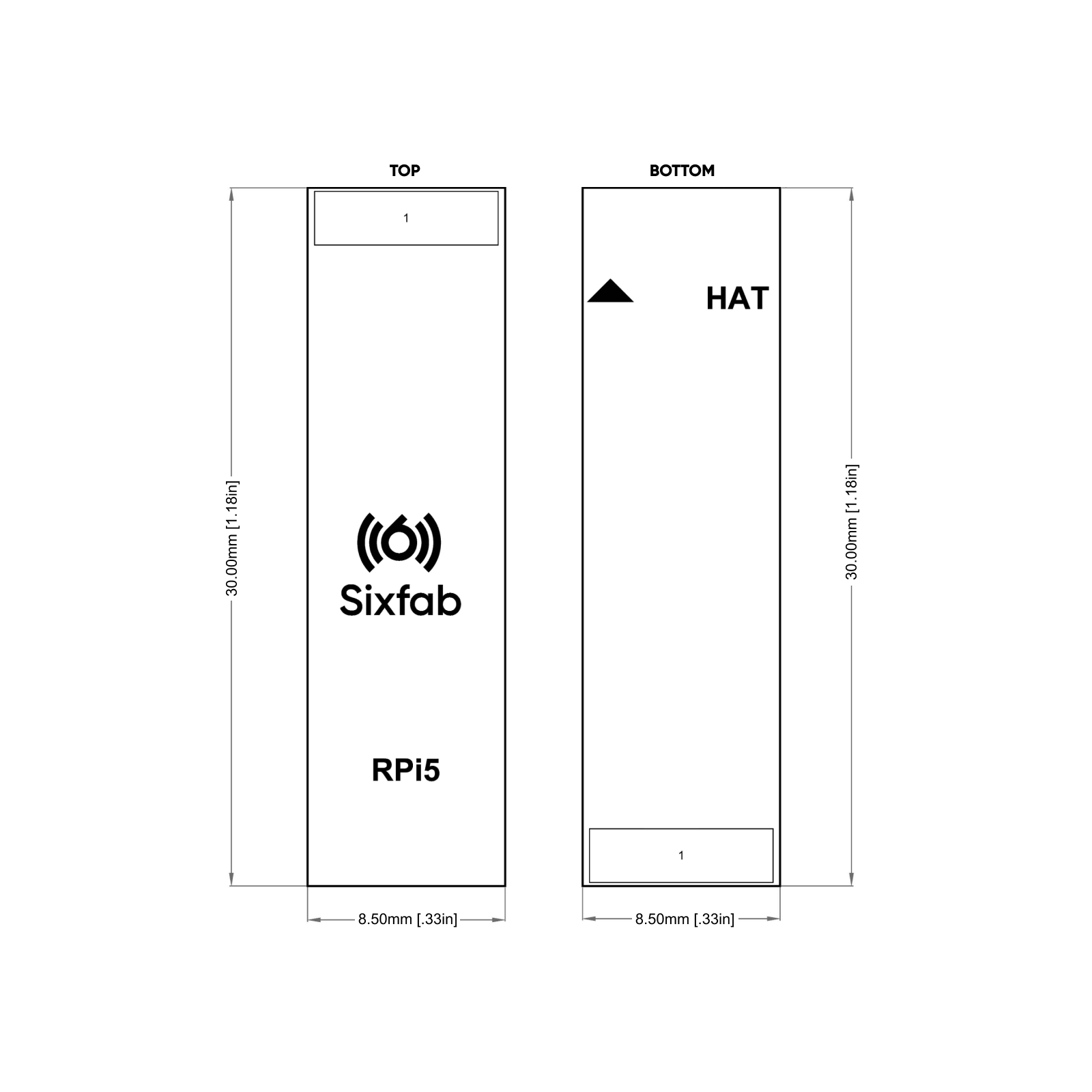
3 16 mm stacking header (2×20, 2.54 mm) ×1
4 M2.5 × 16 mm F-F spacer ×4
5 M2.5 × 5 mm plastic screw ×8
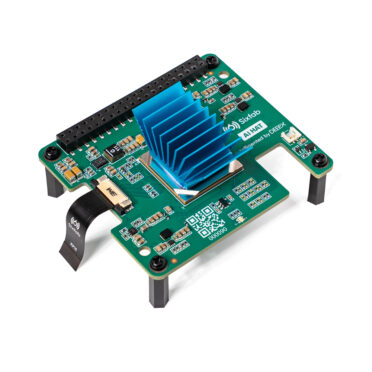
6 Passive cooler (with thermal pad) ×1

Total 6 items

Recommended

Option 2

AI HAT+ with DX-M1M

DEEPX DX-M1M (25 TOPS at INT8) soldered on. Maximum throughput for production vision pipelines, multi-stream inference, and the most demanding YOLOv8 workloads.

1 Sixfab AI HAT+ board 25 TOPS · INT8 ×1
2 PCIe FFC cable (16-pin) ×1
3 16 mm stacking header (2×20, 2.54 mm) ×1
4 M2.5 × 16 mm F-F spacer ×4
5 M2.5 × 5 mm plastic screw ×8
6 Passive cooler (with thermal pad) ×1

Total 6 items

Not included (sold separately)

The following are required or optional for a complete edge AI deployment but are not part of either option:

  • Raspberry Pi 5 (host board, required) — the only supported host platform
  • Official 27 W USB-C PD power supply for the Raspberry Pi 5 (required)
  • microSD card flashed with Raspberry Pi OS (required)
  • Raspberry Pi Active Cooler for the Pi 5 (recommended for sustained 100% NPU utilization)
  • USB or CSI camera (optional, for live vision inference workloads)
Rate Us

Your email address will not be published. Required fields are marked *

Your email address will not be published.

Need More Info
0
    0
    Your Cart
    Your cart is emptyReturn to Shop
      Calculate Shipping
      Apply Coupon